Autobiography · Mental Health

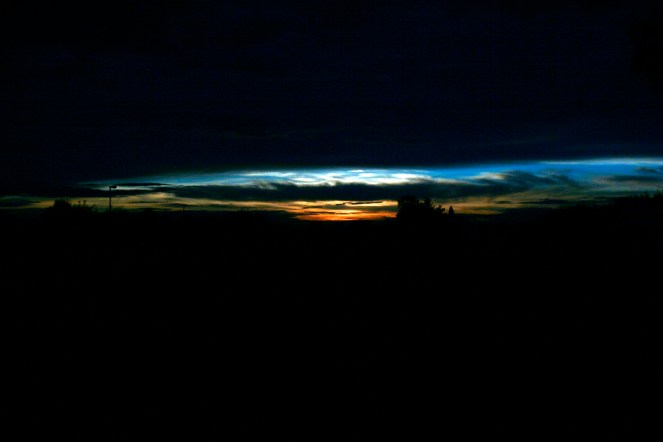
Daylight

"last daylight" © Raul Lieberwirth , 2006. CC BY-NC-ND 2.0.
last daylight” © Raul Lieberwirth, 2006. CC BY-NC-ND 2.0.

They talk about vitamin D and circadian rhythms. Talk about seasonal depression. All I know is that this time of year I start to go just a little crazy. I never know if I should be eating lunch or dinner. Can’t tell if I slept in two hours late or woke up right on time.

I get up well before sunrise because I don’t want to miss a moment of day. Want to make sure I’ve worked out, showered, and eaten breakfast long before the light peers in through our windows.

My alarm clock lamp turns on slow, drowning out the dark of night with a soft white glow over the course of thirty minutes. When my cell phone screams at me, I’m already mostly awake.

I stumble to the bathroom and put on my running clothes before I have a chance to think about anything else. Brush my teeth, layer up, and head outside. The cold is shocking at first, but I adjust quickly, giving into the icy crisp of 5 AM.

On my run I pass an empty field. No lamps or houses to strangle out the still night sky. And I stop and stare at the stars I was never able to see when we lived in downtown Seattle. My frozen cheeks fold up into a smile. I lose myself in thousands of brilliance of it, and for a moment I think maybe the endless night isn’t anything to dread after all.

After breakfast, I take handfuls of vitamins and long pulls from a bottle of fish oil. I sit in front of a HappyLight and hope that maybe something will help this year. I drive to a barre class and bask in the presence of strong women. I stretch out. Chest open, chin up. I play graceful. Long and lean and flexible and tripping over my own feet. Just another silly activity to keep me from sitting and slipping into the dark.

At home, I draw all the blinds, windows open wide. Any ounce of sunlight that I can get, I let in. I don’t dare block it out. Instead, I absorb it. Embrace all I can because there’s not much of it.

In the afternoon, when my office fills up with light, I turn my heat up and strip down to my undershirt. Let the sun climb over my arms, my chest, my face. The hair on my arms prickle back to life and I close my eyes, finally relaxing.

When the last bits of light threaten to sink below the horizon, I put on a raincoat and boots, wrap a scarf up around my face, and pull a hat down over my ears. I face all elements to make sure I get the last little bits of natural brightness to shine in my eyes. And all I can think is that in a month it’s going to be even darker than this. But then I remember that in a month, it’s going to be as dark as it will get.
Autobiography · Mental Health

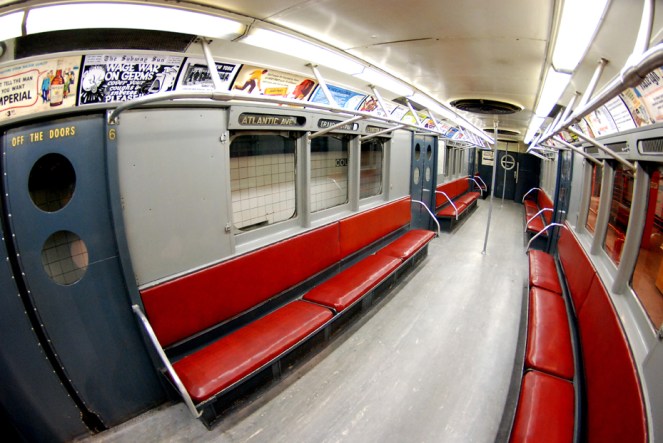
Something New

"New York Transit Museum" © Geoff Wilson, 2008. CC BY-NC-ND 2.0.
New York Transit Museum” © Geoff Wilson, 2008. CC BY-NC-ND 2.0.

My new therapist gives me homework. Tells me to notice when I’m triggered and my thoughts try to get away from me. “All you have to do is recognize that it’s ninety-percent old hurt. You don’t have to do anything. Just recognize that you’re reacting to a situation you’re no longer in,” he says. His voice is soothing, but firm. I can imagine him in a lecture hall with hundreds of students nodding their heads and scrawling notes on yellow legal pads. He tells me, “It’s easy to get swept up in it. It’s an instant reaction. But we can start to recognize it for what it is and then we can work to change it.”

I nod my head. At first because I’m intimidated by him and I want to be agreeable, but then because I know he’s right. I can feel myself opening up to him. A flower unfurling its petals. Slowly at first, and then all at once. “I can do that. I can do this,” I tell him. The sweet sigh of realizing that there are things I haven’t tried yet.

He looks at me over the top of his notebook and says, “You know, it’s not just the big traumas that shape us. Sometimes it’s just a steady drip. It works itself into everything you do, really just ingrains itself into you. And no matter how safe you feel later, or how different your environment is, you are always expecting that drip.”

My breath stops and it’s a moment before I’m able to let out a slow shudder. I crack a smile because it’s the only thing that makes sense. “Yeah, I am.”

On the train ride home I repeat a line from a Shane Koyczan poem over and over again. “If you believe with absolute honesty that you’re doing everything you can, do more.”

It is so easy to think that I’m doing everything I possibly can with the tools I have to work with. Simple to assume that I am at my limit. I swear I feel the strain, the edge of breaking. But I wonder if I’m made of stronger stuff than I think.

At night I find myself curled up in bed, my knees to my chest, and the blankets pulled up over my head. “I can’t do this,” I whisper soft into my palms, my cupped hands catching my breath. But it’s just pulling back, not fact. It’s the automatic reaction to being challenged, to having more thrown at me than I think I can handle. But I’m capable of dealing with it. Of taking a breath and recognizing that I’m not threatened in the way I think I am.

In the morning I put on my running clothes and head out into the dark. One foot after another, I let my body go. My mind finally settling into a rhythm. And instead of submitting, instead of telling myself again that this is too hard and I’m never going to get it, all I say is, “Do more. Do more. Do more.”

Autobiography · Mental Health

Fix

"Tools" © Josep Ma. Rosell, 2007. CC BY 2.0.
Tools” © Josep Ma. Rosell, 2007. CC BY 2.0.

Sometime between the hours of 8 AM and noon, he knocked on my front door. Navy, short-sleeved jumpsuit, worn at the knees. Toolkit sitting next to his feet. He introduced himself and shook my hand. Firm grip, callouses. He was there to fix our oven. I explained to him that it won’t keep temperature. Keeps cooling down in the middle of my baking. A wave of hot and cold. Of course it is. What isn’t?

He moved our rug and pulled out the range. Didn’t say much of anything else to me, but murmured affirmations to himself, “Okay. Alright.” I heard wire curling against steel and pieces being pulled apart, pushed back together again. He didn’t curse or sigh heavy. Just fell in rhythm with his work. He finished quickly.

Sitting at the kitchen table writing, I wondered if he had any idea how heartbreaking the work he does is. How I long to be an appliance. One faulty piece swapped out for a new one and suddenly I’m steady. Predictable. Exactly what the gauges say I should be. How much I wish everything could be fixed.

But then I remind myself that at least one thing in my life can be. I can call a number on a sticker and Dave can come to our apartment and make our oven work again. How fortunate are we?